
Your basket is currently empty!
Advances in Animal Health Science of Pigs – 2026
Advances in Pig Health 2026
Hear from leading scientists sharing new insights in the field of swine health and innovative research approaches with Ankyrons
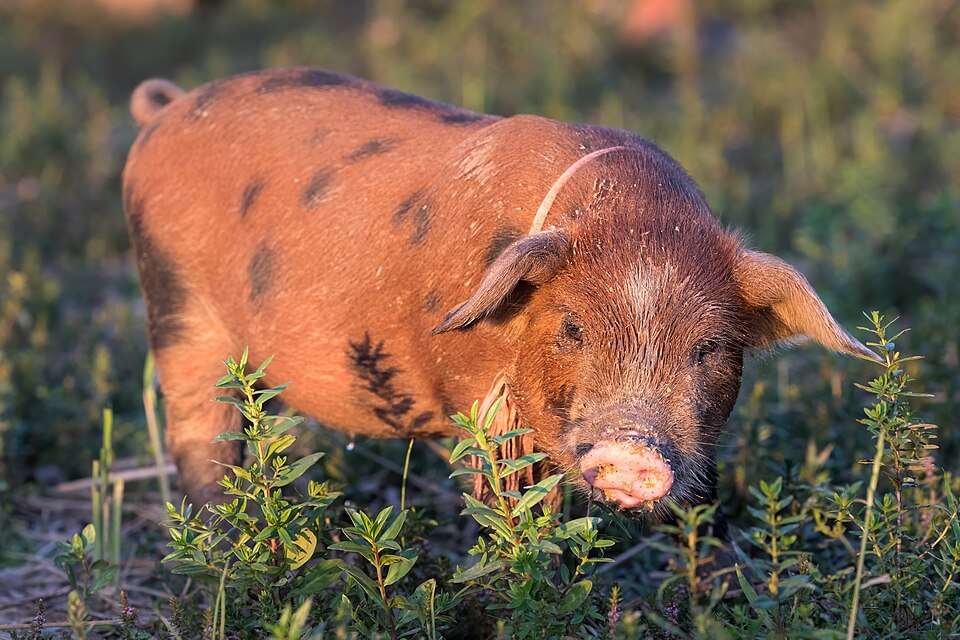
Online Half-day Symposium, Wednesday, 28 October 2026
1:00pm-4:00pm (GMT) / 9:00am-12:00pm (ET) / 9:00pm-12:00pm (GMT+8)
Secure Your Place – Register Today For Free
As one of the world’s most important livestock species, pigs play a significant role in our shared environment. Their close biological relationship to humans, compared with other livestock species, presents both opportunities and challenges for understanding health and disease. As a result, pig health is an important and rapidly evolving area of biological science.
Motivated by the importance of porcine health and the advantages of our Ankyron target binding reagents in this field, we are delighted to announce our upcoming symposium Advances in Pig Health 2026. A shortage of protein detection reagents has hampered progression in this essential area of animal health, with wider implications for human health and well-being. Ankyrons make standard immuno-detection approaches, including immunofluorescence, flow cytometry, immunohistochemistry, and western blotting, accessible for novel targets across the veterinary field.
This half-day symposium will bring together leading scientists from around the world to share their latest research and discuss advances across porcine immunology, vaccine development and infectious diseases, including PRRSV, ASF and Chlamydia. The programme will also explore the use of emerging technologies in animal health, with presentations showcasing current applications of the Ankyron technology in porcine research alongside potential future applications and opportunities.
Join us to share perspectives, discover new approaches and connect with researchers at the forefront of swine and veterinary science.
Speakers
| Talk Time (GMT) | Talk Time (ET) | Speaker | Talk Title and Research Focus | |
|---|---|---|---|---|
| 1:00pm | 9:00am |  | Dr. Jane Edwards Postdoctoral Scientist The Pirbright Institute, UK | Using PD-1 to Define Tfh and Tfr Responses Within Germinal Centres Dr Edwards is interested in understanding immune dysregulation during PRRSV infection, developing tools to better describe the phenotype and function of cells resident in the germinal centres of lymphoid organs and using mouse LDV, as a PRRSV model. |
| 1:30pm | 9:30am |  | Dr. Benedetta Amato Lecturer in Veterinary Pathology University of Bristol, UK | Bridging Species: Insights from Porcine Immunology in the Bovine Tuberculosis Context Dr Amato's research lies at the intersection of comparative medicine and immunology, with a specific emphasis on host-pathogen interactions in both human and animal tuberculosis to uncover novel diagnostic targets and bridge the gap between species-specific immune responses. |
| 1:55pm | 9:55am |  | Olivia Wright and Maya Cowans Immunology Sales Specialist ProImmune, USA/UK | Ankyrons® for Swine Research: Expanding the Toolkit for Target Detection Ankyrons® are small (15kDa) single-domain binding proteins based on an ankyrin repeat scaffold which overcome many of the constraints of research antibodies. Covering a wide variety of veterinary species and Porcine targets, Ankyrons provide a key research tool for advancing pig health. |
| 2:20pm | 10:20am |  | Dr. Leonie Bettin Principal Scientist VIDO, University of Saskatchewan, Canada University of Veterinary Medicine Vienna, Austria | A novel CD69 binding ankyrin repeat protein (Ankyron®) enables detection of early activated and antigen-specific T cells in pigs Dr Bettin completed her postdoctoral research at the University of Veterinary Medicine Vienna, focusing on vaccine development in the pig model. She recently joined the Vaccine and Infectious Disease Organization (VIDO) as a Principal Scientist, where her research focuses on porcine T-cell biology, particularly in mucosal tissues. |
| 2:45pm | 10:45am |  | Prof. Jishu Shi Professor and Director, Center on Biologics Development and Evaluation, Kansas State University, Manhattan, Kansas 66506, U.S.A. | African Swine Fever Vaccine Development: Progress, Promising Candidates, and Critical Gaps Professor Shi is the director of the Laboratory of Vaccine Immunology, which develops vaccine adjuvants, novel diagnostic assays and vaccines for swine infectious diseases. Specifically, we focus our research on African swine fever (ASF), Streptococcus suis, swine influenza virus (SIV), classical swine fever (CSF), porcine reproductive and respiratory syndrome (PRRS), and other emerging infectious diseases of swine. |
| 3:10pm | 11:10am | 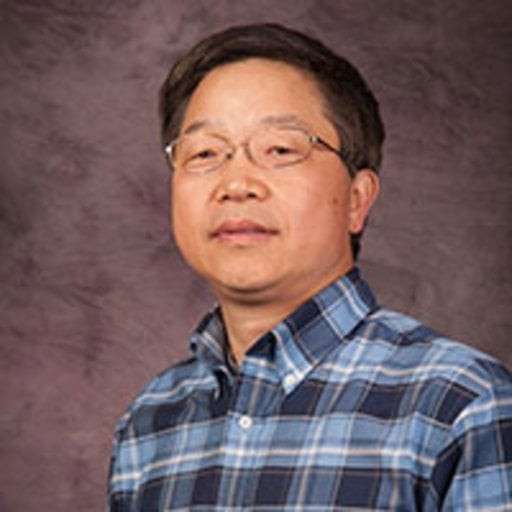 | Prof. Yongming (Simon) Sang Professor, Animal Genomics and Health, Tennessee State University, USA | From Genome to Vaccine: Harnessing the Porcine Interferon System for Enhanced Immune Regulation Dr. Yongming (Simon) Sang serves as the Focus Group Leader for Animal Science and Supervisor of the ImmunoGenomics Laboratory. His research focuses on the molecular and functional complexities of virus–host interactions, with particular emphasis on immunogenomics and antimicrobial interventions. Dr. Sang applies systems immunology approaches that integrate bioinformatics and omics technologies with classical immunological analyses. His work specifically targets porcine reproductive and respiratory syndrome virus (PRRSV) and influenza viruses. |
| 3:35pm | 11:35am |  | Dr. Laura Miller Associate Professor, Veterinary Virology, Immunology & Genetics Kansas State University, USA | PRRSV MLV Systems Immunology & Immunomics: Highlighting global transcriptomic/multiomic signatures, systemic immune activation, and key immunogenetic markers following our IFN-augmented MLV vaccination. Dr Miller's goal is to advance the understanding of the genetic component of disease expression in livestock, developing techniques to characterize the host response to swine viruses. Laura also collaborations across academia, government, and industry, including significant involvement with the National Bio and Agro-Defense Facility (NBAF) related to high-consequence pathogens. |
How will I benefit?
Learn from leading scientists discussing their current research objectives and discoveries in pig and animal health.
Share information with scientists from other groups and explore new opportunities for collaboration including the avenues opened by the availability of new research tools such as Ankyrons.
Discover fresh perspectives and novel ideas to combat the challenges in the rapidly changing field of pig biology.
Connect with scientists from different parts of the world with similar research interest.
Conference Enquiries:
Email: enquiries@proimmune.com
Telephone (toll free): USA & Canada +1 888 505 7765
Asia-Pacific, Australia & New Zealand Region: +65 8338 1853; incl. WhatsApp/WeChat/Kakao
All Other Countries: +44 330 139 0000
Background to ProImmune Symposia
ProImmune’s series of symposia, including its Mastering Immunity series of conferences, has brought together thousands of scientists from a diverse range of organisations around the world, providing a forum to share knowledge, explore emerging discoveries, and address practical challenges in understanding immunity and disease.