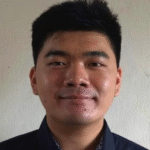
 Daryl Lee Daryl Lee
Research Assistant in Infectious Diseases Research Programme
NUS |
Title:
A Dendritic Cell-targeting Approach to Deliver a Universal Influenza Vaccine Candidate to the Respiratory Mucosa
Abstract:
Seasonal influenza vaccines require annual updates due to antigenic drift and waning immunity, highlighting the need for a universal flu vaccine targeting conserved viral epitopes. The extracellular domain of M2 (M2e) is a leading universal vaccine antigen candidate, but its weak immunogenicity hinders clinical development.
To enhance M2e immunogenicity, we developed a dendritic cell (DC)-targeting vaccine by fusing M2e to the heavy chains of a Clec9A-specific monoclonal antibody (Clec9A-M2e). We show that a prime-boost regimen with only 2µg of the Clec9A-M2e construct (adjuvanted with poly I:C) induced very high systemic M2e-specific IgG titres that afforded full protection against lethal H1N1/PR8 challenge in young adult mice, with minimal body weight loss up to 6 months post-boost. We also employed an antibody-dependent cell cytotoxicity (ADCC) reporter assay to demonstrate the functionality of immune sera collected. The Clec9A-M2e prime-boost immunization also generated significant M2e-specific T cell responses both systemically (spleen) and locally (lungs).
In aged mice, Clec9A-M2e induced significant but lower M2e-specific antibody, T cell responses, and ADCC activity, correlating with only 50% protection and moderate lung viral reduction upon challenge. In young mice with pre-existing flu immunity, a single Clec9A-M2e dose boosted M2e-specific antibody titres to levels comparable to prime-boosted flu-naïve mice. Aged mice with pre-existing immunity required two doses of Clec9A-M2e to achieve similar immune responses.
Taken together, these results support that the Clec9A-targeting strategy represents a promising vaccine delivery platform able to overcome the weak immunogenicity of M2e and induce strong immune responses upon respiratory immunization.
Biography:
Daryl Lee is a final-year PhD candidate at the National University of Singapore, based in Prof. Sylvie Alonso’s laboratory in Immunology Programme, Life Science Institute. His research focuses on the development of a universal influenza vaccine that elicits broad and durable immune protection. With training in both virology and immunology, Daryl’s work combines vaccine development, in vivo models, and ex-vivo immune profiling. He is passionate about translating immunological insights into real-world applications and aims to further vaccine innovation through continued research in infectious diseases and immunology.
|